













Have you heard...
...what are endurance basics ?
ENDURANCE SPECIAL – Part I
Endurance is not the same as condition! Condition is the generic term for energetic qualities of the organism and the musculature. This includes: power, endurance, speediness, flexibility, coordination. A condition-workout focuses on the improvement of conditional features. The endurance workout is in a way a part of the condition-workout. In sports, endurance means „physische und psychische Widerstandsfähigkeit des Organismus gegen Ermüdung bei lang andauernder Belastung und / oder die rasche Wiederherstellungsfähigkeit nach der Belastung„ (translated: the physical and mental resistance of the organism against fatigue during a long-lasting exposure and/or the rapid recovery after an exposure) (Grosser, 1986). Therefore, endurance is a motor basic feature / conditional ability, which is of great importance for almost each kind of sports. It is characterized by the following functions (Scheid/Prohl, 2007):
- long maintenance of an optimal exposure intensity respectively keeping low the indispensible intensity losses during longer
long-lasting exposures
- increase of the tolerance of exposure
- stabilization of a sportive technique and improvement of powers of concentration
- increase of recovery after an exposure
This means: Endurance = Resistance against fatigue + rapid recovery ability (see Grosser in Scheid/Prohl, 2007). Furthermore, a good endurance convinces by a high level of mental ability to cope with pressure.
The topic endurance – a vast and very complex construct – is divided into six areas (see Scheid/Prohl, 2007):
- local and general endurance
- aerobic and anaerobic endurance
- dynamic and static endurance
- short/middle and long-term endurance
- power/elasticity/sprint/play/contest and combination sports endurance
- basic and special endurance.
We would like to start with the terms „local and general endurance“ in the first part of our threepart endurance special.
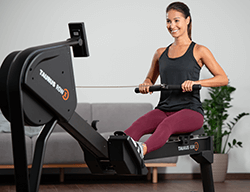
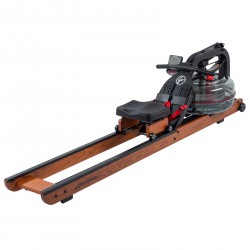
The local and general endurance cover the demanded muscles. Local endurance means that only a very small muscles group (1/6 to 1/7 of the total skeletal musculature) is demanded during the motion. General endurance stands for the resistance against fatigue during motions whereas the whole body is demanded – that means large muscle groups are used, i.e. rowing.
Before starting the endurance workout, the corresponding workout target and workout condition have to be clear (i.e. by using an (introducing test). Regarding leisure sports and rehabilitation sports, the following targets are often categorized:
| - Optimization of performance |
- Improvement of blood circulation |
| - Improvement of functionality of |
- Encourage self-confidence
|
| heart, lungs and circulation |
- Retarding ageing process |
| - Strengthening of the cardiovascular system |
- Fight against lack of exercise |
| - Improvement of metabolism |
- Reduction of stress/stabilization of health |
| - Weight reduction/fat reduction |
- Fun/sociability/communication (run-meeting) |
Chart 1: Endurance workout targets
Based on the fixed workout target and the established workout condition, corresponding workout measures and methods are derivated. There are three different methods: duration method (continuous, with intensity change), interval method (extensive, intensive, iterative), competition and control method.
|
Workout method
|
Impulse intensity1
|
Qty of repetitions
|
Pauses
|
Workout target
|
|
continuous duration method
|
const. very low-very high
|
--
|
--
|
aerobic (anaerobic)
|
|
duration method + intensity change
|
change low and high
|
--
|
--
|
aerobic (anaerobic)
|
|
extensive interval method
|
middle 60-80%
|
a lot/many
|
profitable² (--> short)
|
aerobic + anaerobic
|
|
intensive interval method
|
high 80-90%
|
middle
|
profitable² (--> middle)
|
anaerobic + aerobic
|
|
repetition method
|
very high 90-100%
|
small
|
complete³ (--> long)
|
anaerobic
|
|
Competition & control method
|
very high 100%
|
--
|
--
|
competition-specified endurance
|
|
|
Chart 2: Overview workout methods, exposures, targets (see Scheid/Prohl, 2007)
|
| |
|
¹) exposure normative, which means the strength of each single impulse. Further exposure normatives are impulse density (temporal relation of exposure and recovery stages), impulse duration (exposure time of each single impulse respectively of an impulse series). Impulse range (duration and quantity of impulses per workout unit) and workout frequency (quantity of workout units per week respectively per day).
²) 120 to 130 heartbeats per minute
³) below 80 heartbeats per minute
|
Walking Test
-
Preparation
- Slightly moisten your chest strap and fix it underneath the chest muscles respectively the base of the bra.
-
Realization of the test
The Walking Test can be either realized on the treadmill or outdoors. Please read carefully the advices, before you start the test.
- On the treadmill: Set an incline of 1 % (--> simulation of the air resistance).
- Walk a distance of 2 km as fast as you can.
- Outdoors: If possible, use the sports grounds at your disposal in order to measure the distance covered.
(--> stadium lap = 400 m).
- Keep in mind time and heart rate at the end of those 2 km.
- Write down time and heart rate on the questionnaire.
-
Attention
Stop immediately the test when you recognize one of the following symptoms:
- Pain in the thorax
- Shortness of breath
- Tickle in one's throat
- Exhaustion
- Pain
- Dizziness
- Nausea
- Spots before one's eyes
- Buzzing in one's ears
Norm chart Walking Test
Norm values for men
| Age |
Below average |
Average |
Above average |
| 20 |
> 00:15,45 |
00:15,15 - 00:15,45 |
< 00:15,15 |
| 25 |
> 00:15,52 |
00:15,30 - 00:15,52 |
< 00:15,30 |
| 30 |
> 00:16,00 |
00:15,45 - 00:16,00 |
< 00:15,45 |
| 35 |
> 00:16,07 |
00:16,00 - 00:16,07 |
< 00:16,00 |
| 40 |
> 00:16,30 |
00:16,15 - 00:16,30 |
< 00:16,15 |
| 45 |
> 00:16,30 |
00:16,22 - 00:16,30 |
< 00:16,22 |
| 50 |
> 00:16,45 |
00:16,30 - 00:16,45 |
< 00:16,30 |
| 55 |
> 00:17,00 |
00:16,37 - 00:17,00 |
< 00:16,37 |
| 60 |
> 00:17,15 |
00:16,45 - 00:17,15 |
< 00:16,45 |
| 65 |
> 00:17,45 |
00:17,00 - 00:17,45 |
< 00:17,00 |
| 70 |
> 00:18,15 |
00:17,15 - 00:18,15 |
< 00:17,15 |
Norm values for women
| Age |
Below average |
Average |
Above average |
| 20 |
> 00:17,15 |
00:15,45 - 00:17,15 |
< 00:15,45 |
| 25 |
> 00:17,22 |
00:15,52 - 00:17,22 |
< 00:15,52 |
| 30 |
> 00:17,30 |
00:16,00 - 00:17,30 |
< 00:16,00 |
| 35 |
> 00:17,37 |
00:16,07 - 00:17,37 |
< 00:16,07 |
| 40 |
> 00:17,45 |
00:16,15 - 00:17,45 |
< 00:16,15 |
| 45 |
> 00:17,52 |
00:16,22 - 00:17,52 |
< 00:16,22 |
| 50 |
> 00:18,00 |
00:16,30 - 00:18,00 |
< 00:16,30 |
| 55 |
> 00:18,07 |
00:16,37 - 00:18,07 |
< 00:16,37 |
| 60 |
> 00:18,15 |
00:16,45 - 00:18,15 |
< 00:16,45 |
| 65 |
> 00:18,30 |
00:17,00 - 00:18,30 |
< 00:17,00 |
| 70 |
> 00:18,45 |
00:17,15 - 00:18,45 |
< 00:17,15 |
Here you get to the Endurance special part II (Heartrate controlled workout)